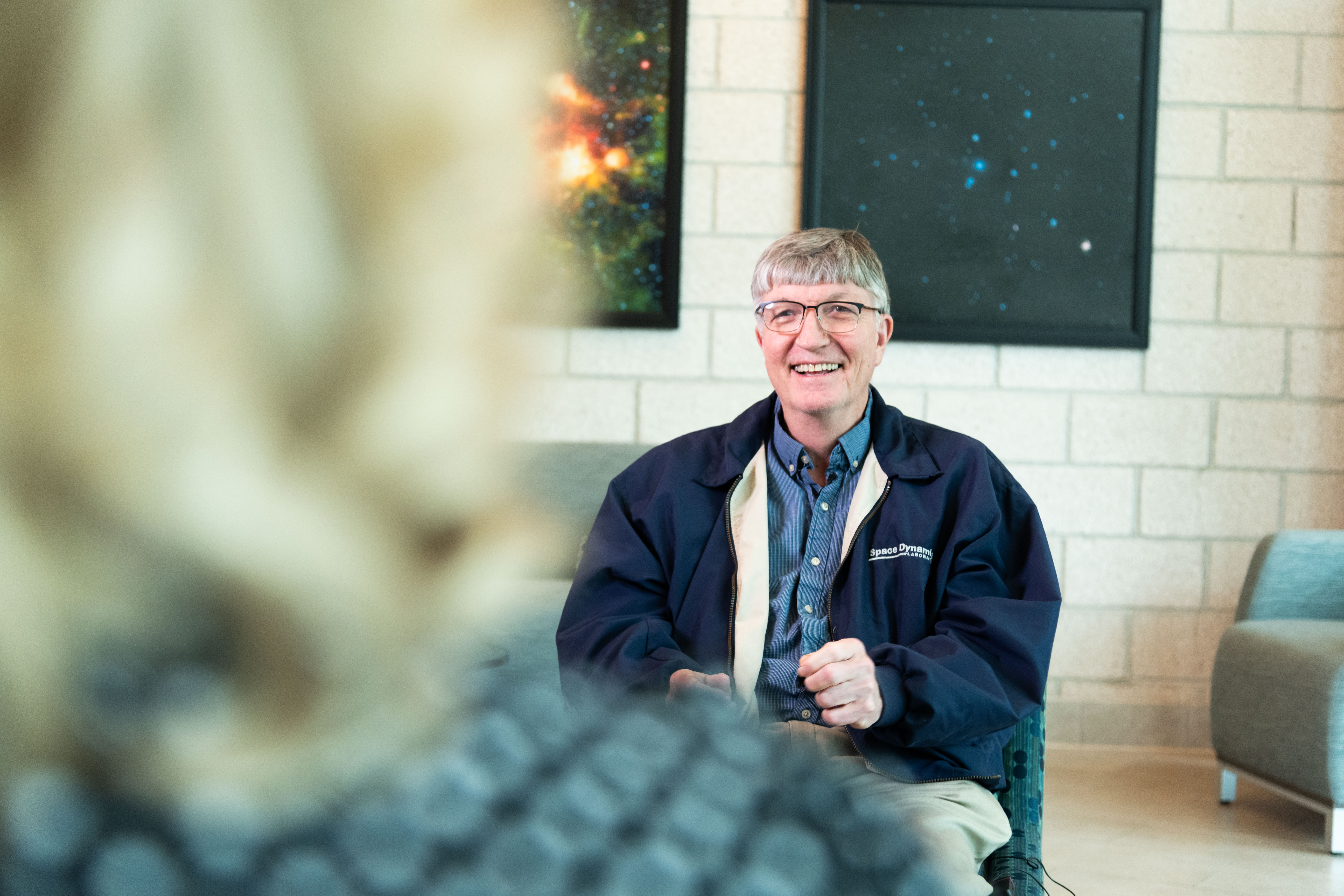
Journey with Alan Thurgood through nearly five decades of SDL’s growth from a small University laboratory to an industry leader. Credit: SDL | Allison Bills
For nearly 50 years now, 47 to be precise, Alan Thurgood has been involved in the design, integration, testing, and flight support of numerous visible and infrared systems. Throughout his career, he has served in many leadership positions, including the director of the former Calibration Division and later director of the Civil and Commercial Space Division, which supports all NASA and commercial customer programs. Today, Alan is one of SDL’s most distinguished engineers who has managed countless programs and mentored even more engineers. He is known for his calibration and engineering expertise, strong work ethic, problem solving abilities, and sense of humor.
The Early Years
Alan began his career at the Space Dynamics Laboratory in 1979, shortly after getting married and graduating from Utah State University with a BS in electrical engineering. At that time, Alan worked for the Electro Dynamics Laboratory, one of two university labs (the other being the Space Measurements Laboratory) that later merged to become the Space Dynamics Laboratory.
Alan’s early work was with interferometers and spectrometers. The work then was not like it is today. “When I started, we didn’t have desk computers. The biggest form of communication was sending faxes rather than email, which is archaic to think of now,” Alan reminisced. “Everything has changed drastically—from the way we work to the way we interact with people.”
Alan observed that one of the advantages of working for SDL was being involved in all areas of small programs and learning the value of each role, noting, "The programs we work on and the role each person plays are important. We all have a chance to make a difference to the world and to our country."
SDL’s UARC Journey
SDL was designated as one of the original six University Affiliated Research Centers (UARCs) in 1996, and Alan witnessed the change. “Prior to the UARC designation, SDL worked on defense contracts. After becoming a UARC, SDL became part of the Government team, where we could truly understand the real issues and solve challenges more rapidly,” Alan recalled. SDL’s UARC designation solidified its place as a defense contractor and enabled the Lab to expand into more diverse areas.
Alan understands why SDL is a go-to for Government solutions. “We have a 67-year history and have been through a lot of things, learning many lessons the hard way. We have developed a catalog of equipment, capabilities, and personnel expertise and talents that the Government needs,” he said, adding, “when people work with SDL, they can expect a good product.”
Our partners benefit from the technical capabilities, manpower, depth, and breadth SDL has developed over more than six decades. We are not recreating how to do things or building things from scratch, which reduces mission risk and cost.
Driven by People and Purpose
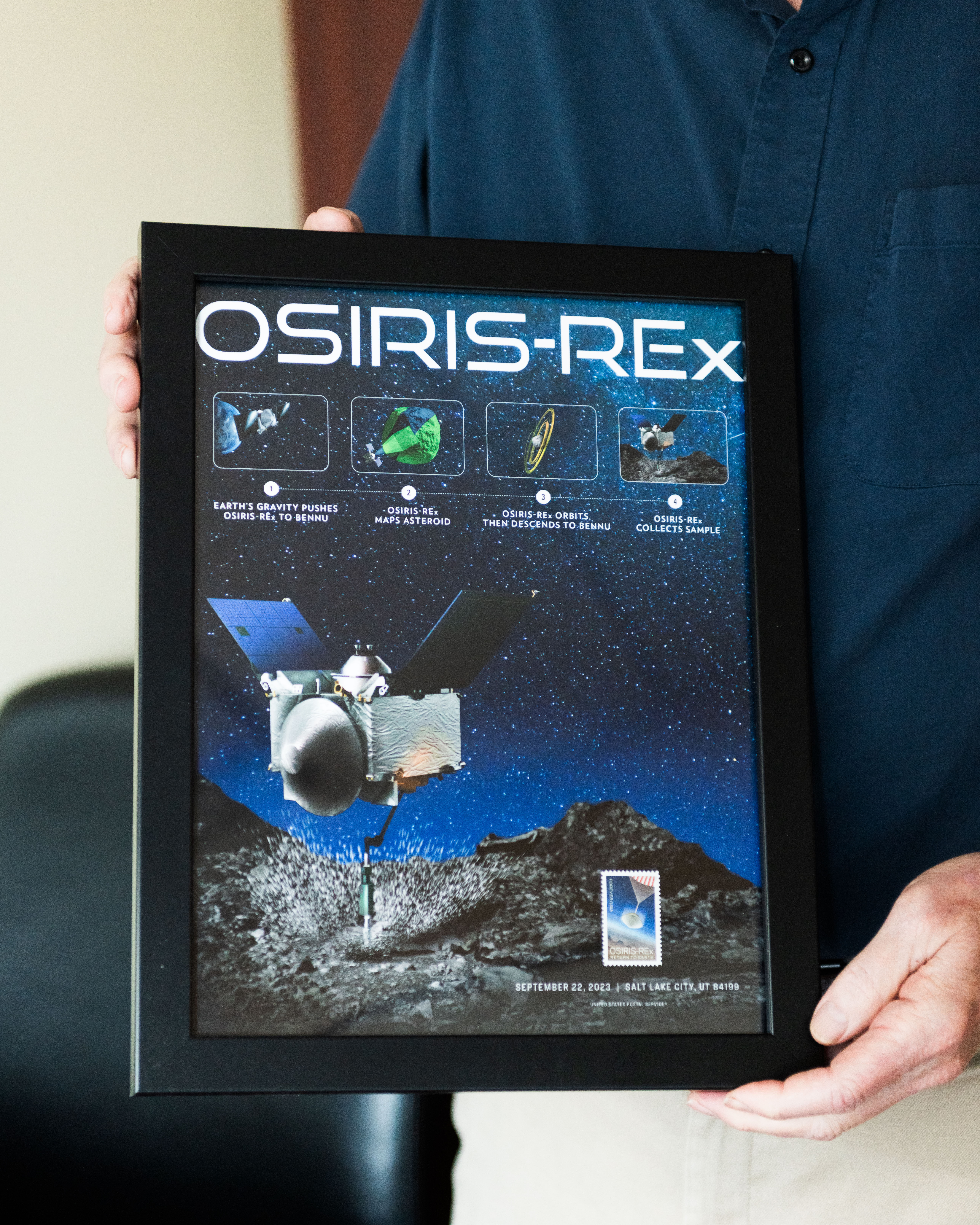
It is not surprising that Alan loves what he does. “I feel like a kid in a candy store every day,” he said. “I get to work on cool things that make a difference to the world and our country.” One of the highlights of Alan’s career has been attending launches for experiments and instruments he helped develop. “There is nothing cooler in this world than watching the project you worked on for several years taking off into space,” he shared. That excitement has fueled his enthusiasm for coming to work.
Alan extends that same passion to his leadership style, where he strives to be dependable and supportive while trusting his teams to use their expertise and autonomy to solve complex challenges. “When things seem tough, if you have a good team around you and work at it, then anything is possible,” he noted, emphasizing the importance of teamwork when accomplishing critical missions.
Alan also credits people as the key to SDL’s success. He is amazed by SDL’s growth from a small university lab to an organization with world-class capabilities employing over 1,400 talented professionals. SDL now takes on projects that would have been unimaginable 30 or 40 years ago.